
NOTE: THESE REQUIREMENTS CHANGE ON A REGULAR BASIS AND WERE LAST UPDATED IN 2015
When determining which airline will give you the best reward travel, it’s important to be familiar with some of the standard mileage requirements. For example, did you know that ANY domestic flight within the 48 continental United States will cost you 12,500 miles each way (25,000 miles roundtrip) in economy? If you’re looking to fly in First Class, the price doubles to 25,000 miles each way for 50,0000 round trip. Regardless of which airline you choose or your departure and arrival cities, anywhere in the lower 48 states will have the same cost.* Let’s look at a few examples for details. (Click on the images to view in larger detail- the text is small on some of them)
*The only exception to this is Southwest which I’ll discuss in further detail later.
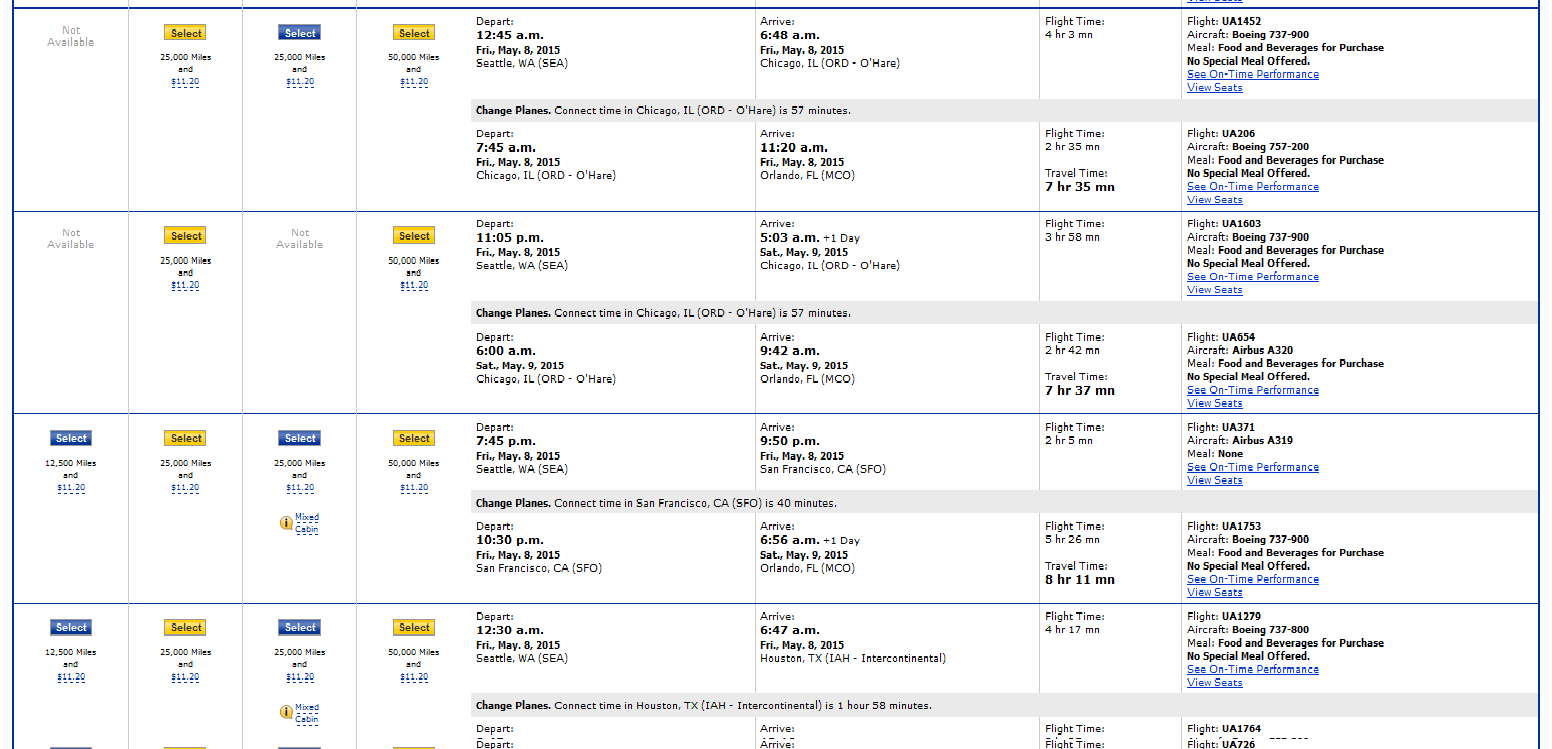
Here you see United’s availability for a random date in May flying from Seattle to Orlando. That’s a pretty long stretch, so 12,500 each way definitely seems like a good spend.
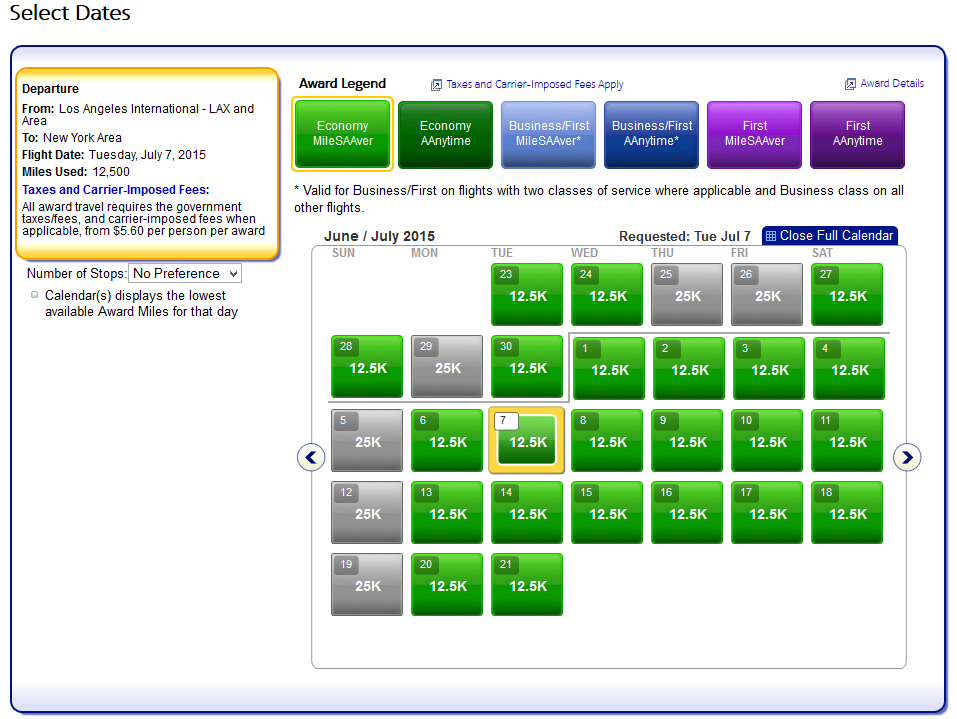
How about American Airlines? Another long stretch is Los Angeles to New York City. I plugged in some random dates in July and availability also shows it’s 12,500 miles each way. Another very long journey that seems pretty worth it for the spend to me.
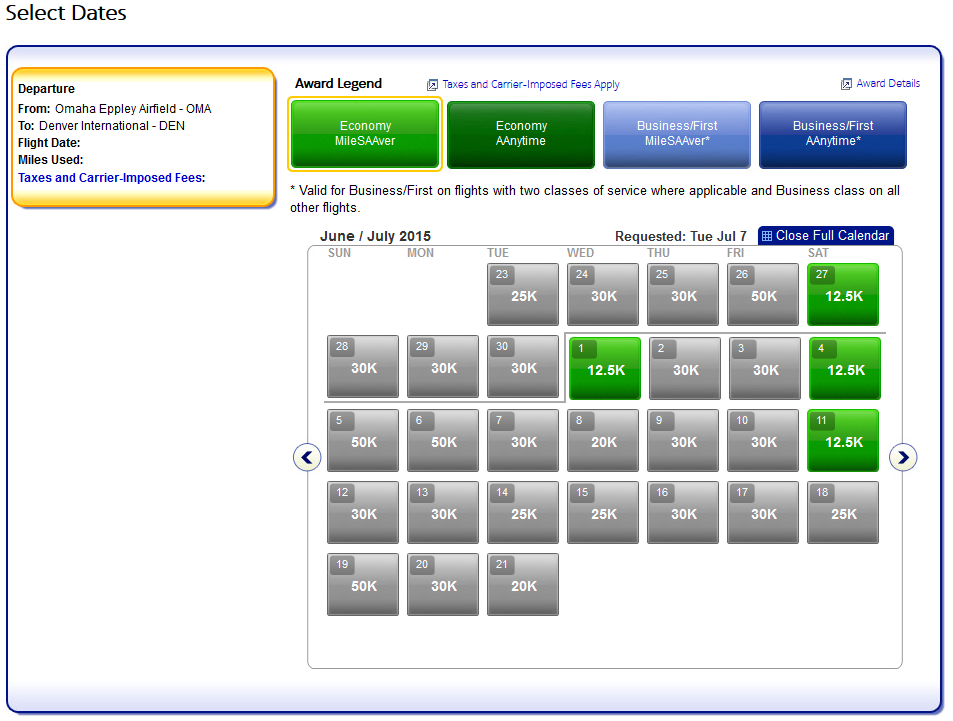
But what about flying from Omaha to Denver- which is just a seven hour drive? You would think that could be cheaper than flying multiple connections all across the country. But again, here is American Airlines below and you can see it’s still the standard 12,500 miles each way. 25,000 miles for a trip from Nebraska to Denver definitely does NOT seem worth it to me. For 30,000 miles I can get to Europe one way! I’d way rather make a drive to Denver than waste miles like that.
Thankfully Southwest provides some excellent alternatives to avoid this inflated mileage costs for short routes. We’ll dive into those later in my upcoming Southwest series where you’ll see why I love that airline so much.
Ok, we’ve established that domestic travel within the U.S. is standard across the board. How about international flights? That’s where the rules change a bit. When an airline determines a mileage requirement it’s based on the departure zone and arrival zone. Typically these zones are split my continent. This means it doesn’t matter where in the U.S. you start from or which country in, say Europe for instance, you end up in. The mileage cost is the same, it just depends on your departure zone and arrival zone. Let’s look at an example of this below.
United charges 30,000 miles to get from the U.S. to Europe in economy class each way for a total of 60,000 miles roundtrip. Here’s a random date in July that I plugged in flying from Omaha, Nebraska to Prague, Czech Republic.
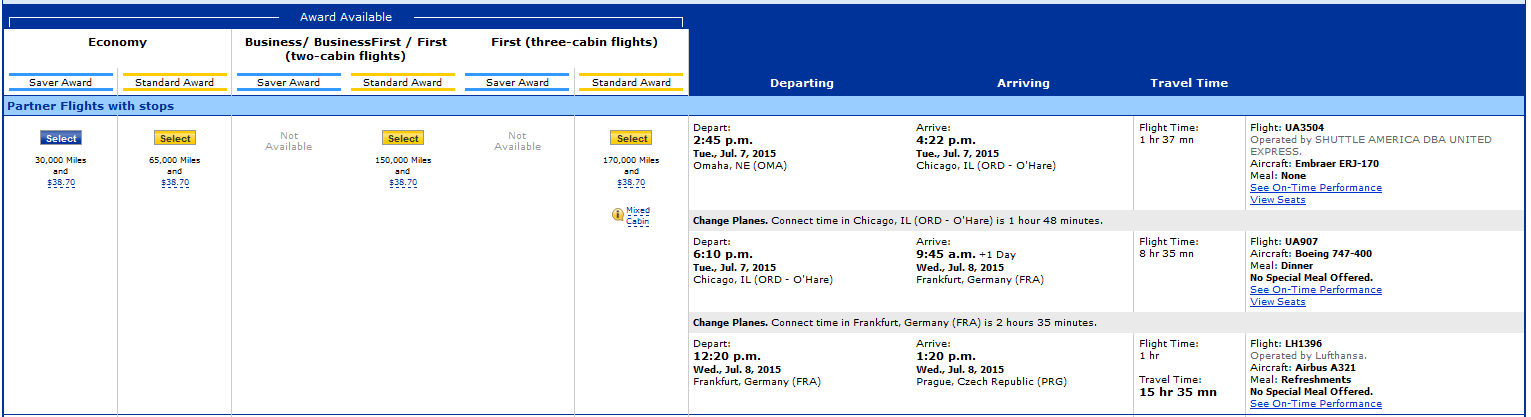
How about if we decide to go to London instead, which is considerably closer to the U.S. than Prague? Same date with United again and you can see it’s still 30,000 miles.

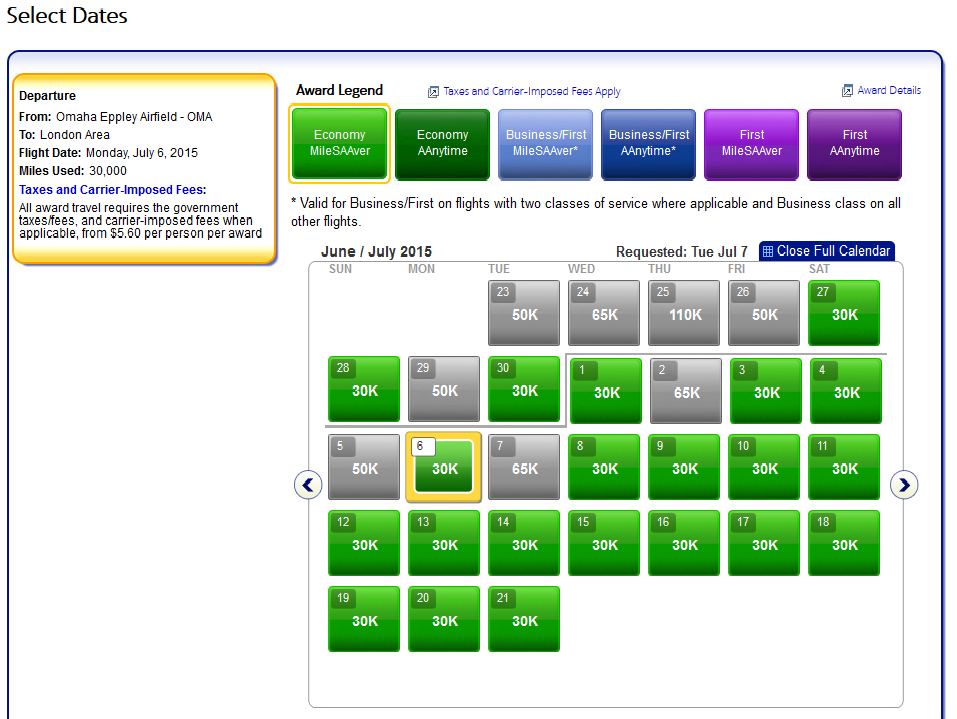
A comparison on American Airline shows similar results as well, and with a lot of open seats at the moment!
For the U.S. to Europe on both United and American Airlines, the cost is 30,000 miles one way. Does this mean all international routes are also standard when it comes to mileage requirements across airlines? Not exactly. There are some slight changes in requirements from airline to airline.
Here I did a search on American Airlines again, this time from New York, NY to Johannesburg, South Africa. A one way ticket in economy class costs 37,500 miles.
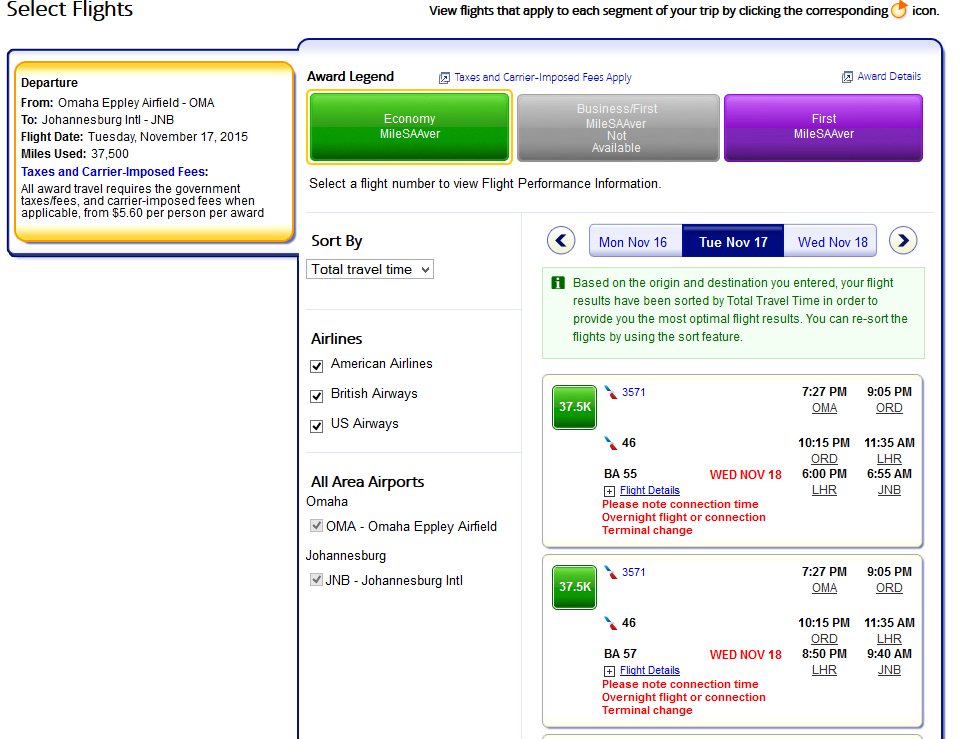
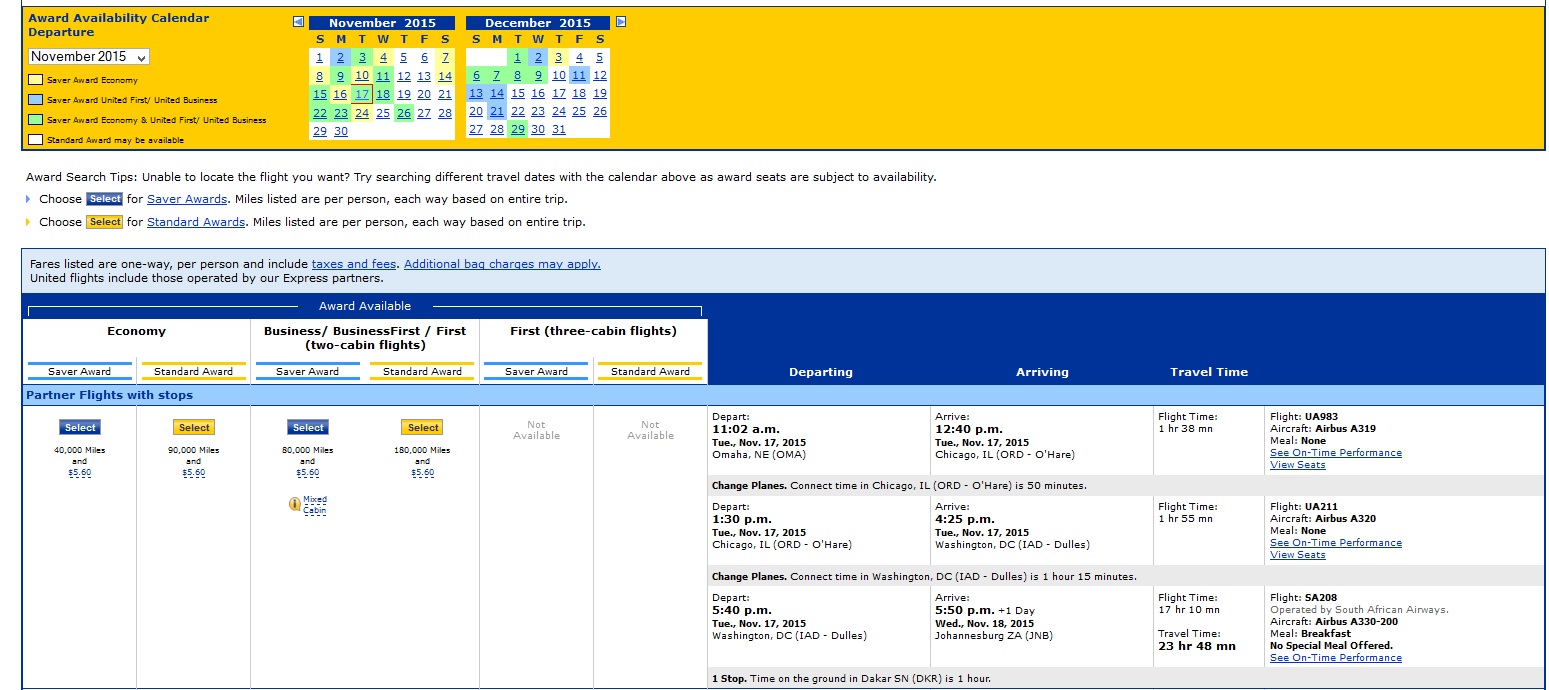
I searched for a United flight from the U.S. to Johannesburg as well, and you can see the mileages is actually slightly higher on United, costing 40,000 miles for a one way in economy and 80,000 for a one way in first class. Depending on how many miles you have lying around, flying first class on this kind of flight may actually be worth it since it’s so long. Especially if there are lay flat beds available!
So in the South Africa case, American Airlines is going to the better travel option. But for Europe, either airline could be good. Whenever you’re ready to start planning a trip, my first piece of advice is to choose your destination. You can then do some research looking online for which airline will give you the best deal in mileage to get there. Of course, sometimes the airline I use also depends on the current credit card offers out there- if one is offering a super high bonus then I may use that airline just because I have earned miles on it.
It’s always a good idea to do some research to be in the know of how many miles you will need. A couple other pieces to keep in mind:
1. Airlines do change rates for on and off seasons. So if you’re looking at specific dates, make sure to check in that month. For example, flights to Europe in the winter will be cheaper than flights in the summer. Make sure your estimations are accurate!
2. Within a continent, the travel zones can sometimes be split for mileage requirements. For example, northern South America is cheaper than the rest of South America. We booked our flights on American from the U.S. to Peru for only 17,500 miles one way! However this is very different than the flights we booked on United to Chile (definitely in southern South America) which cost 30,000 miles for one way. Another example is that flights on United from the U.S. to Beijing are 35,000 miles while flights from the U.S. to Bangkok are 40,000 miles. Southeast Asia is considered a different area than northern Asia.
It can seem a bit confusing an overwhelming at first, but a few basic guidelines will get you started:
- Choose your destination
- Do some basic research on mileage requirements to get there with the major airlines (like United and American Airlines)
- Review current credit card offers on the market to see which airline you may be able to earn the most miles with. Also, check your current mileage balances in your frequent flyer programs and current credit cards.
- Use travel blogs to learn about other, smaller airlines which also may have some helpful alternative options. We’ll dive deeper into Airline Alliance systems at a later date.
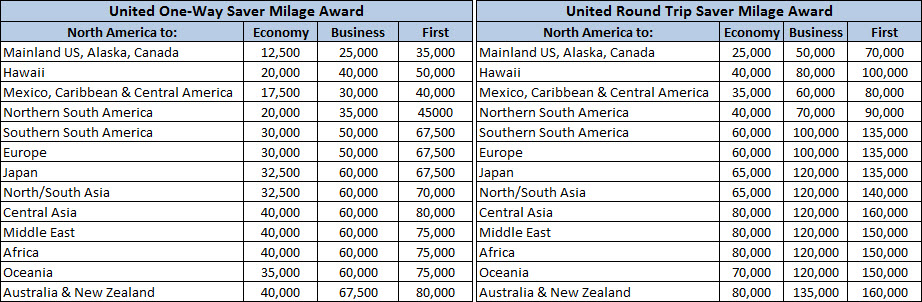
Here are some basic award charts for United and American Airlines. But it’s always safest to search yourself and double check that they haven’t changed the requirements. And as always, I’m happy to help answer any questions along the way.

 Fire Round the World